Before the Civil War, there was no single day for remembering soldiers who died in war; people just did their own thing, for their own relatives. This changed in the aftermath of the Civil War, probably in part because far more people had died than in all the other wars combined. A need arose to commemorate the deaths, and in 1865 the federal government began creating national cemeteries to bury soldiers.
General John Logan, at that time the commander in chief of the Grand Army of the Republic, the Union veterans organization, called for a Decoration Day on May 30, 1868, to remember the fallen boys in blue. ('Decoration' referring to wreaths and pictures and the like decorating graves, not military awards.) It was already a tradition in the southern states, having started in 1866, but different states picked different dates, going from late April to early June.
Initially, Decoration Day ceremonies were half an excuse for bashing the Confederacy, its soldiers, and its leaders. However, it also strengthened a sense of national unity and goodwill, and by the time Reconstruction ended, the latter was a much larger part of the events than the former, frequently commemorating the dead of both sides.
Memorial Day became a more common term, first arising in the 1880s, and overcoming Decoration Day after World War II, with official recognition by President Johnson in 1967. For a century, the date was May 30, but in 1968, Congress passed the Uniform Monday Holiday Act, which moved Memorial Day, Washington's Birthday, Veterans Day, and Columbus Day to Mondays, so people would have three-day weekends. (Largely federal employees, since they're the only ones who have to get those days off, but a fair number of businesses are closed on those days as well.)
Now, we all love three-day weekends, but the VFW has pointed out that getting the Monday off is kind of missing the point of the day itself; some holidays are primarily about not working, but this isn't one of them. The original date was pretty much arbitrary, apart from being good for having flowers in bloom and not being the date of any actual battles. Donald Inouye, a WWII veteran, introduced a bill changing the date back every year, from 1987 until he died in 2012.
Monday, May 26, 2014

Saturday, May 24, 2014
What's the Emancipation Proclamation, and why did it matter?
The standard three-second spiel you get in school is "Lincoln freed the slaves". Unsurprisingly, it's a lot more complicated than that, but it's hard to get much nuance in when you have to cover two hundred years in nine months.
The Civil War began largely because the slave states were terrified that Lincoln would outlaw slavery; he had expressed only an opposition to extending slavery to the territories and new states, but given his antipathy towards the practice, their fear was somewhat justified. There was also the issue of tariffs: charging a tax on imported goods, and thus forcing the consumer to pay more. Northern industrialists wanted to protect their developing factories from cheap products brought over from England, but the South was mostly plantation-based, and didn't want to pay more for clothes and machinery. Tariffs weren't directly part of the conflict, but the argument certainly heightened the tensions between the two sides.
The banner of states' rights was certainly trumpeted as justification for secession, but slavery advocates had consistently argued for a state's right to allow slavery, and against a state's right to ban it. The Confederate Constitution did not allow a state to ban slavery, and in fact required both states and the country as a whole to protect it.
The Emancipation Proclamation did free slaves but it only covered the parts of the country that were in active rebellion; slave states that had not seceded, like Maryland and Delaware, were unaffected. Lincoln declared that this was an exercise of his power as commander-in-chief of the Union Army, and the order also allowed ex-slaves to join the military. This prompted the flight of hundreds of thousands of slaves in the Confederacy, and by the end of the war nearly two hundred thousand black men had served in the Army or Navy.
Shockingly, the Confederacy got really mad at this, and said any black soldier would be summarily executed if captured; Lincoln countered with a promise that one rebel soldier would be executed for every soldier illegally killed, and one would be put to hard labor for every soldier enslaved. (Shooting a guy who's shooting at you is just fine; shooting a guy who's unarmed and helpless is quite something else.) The threat was carried out when the Union knew about executions and slave-taking, and the Confederacy didn't exactly back off, but it didn't happen as much as you would think.
Unfortunately, being in the Army and officially having the protection of the U.S. government doesn't mean nobody's going to be a jackass. While eighty black soldiers received commissions as officers, that's a very small fraction of the number above who served, and until April 1864 black soldiers were effectively paid $7 a month, to the white soldiers' $13.
The Emancipation Proclamation, as a war measure, was inherently limited, and Congress passed the 13th Amendment, banning slavery throughout the country, to extend and solidify it.
The Civil War began largely because the slave states were terrified that Lincoln would outlaw slavery; he had expressed only an opposition to extending slavery to the territories and new states, but given his antipathy towards the practice, their fear was somewhat justified. There was also the issue of tariffs: charging a tax on imported goods, and thus forcing the consumer to pay more. Northern industrialists wanted to protect their developing factories from cheap products brought over from England, but the South was mostly plantation-based, and didn't want to pay more for clothes and machinery. Tariffs weren't directly part of the conflict, but the argument certainly heightened the tensions between the two sides.
The banner of states' rights was certainly trumpeted as justification for secession, but slavery advocates had consistently argued for a state's right to allow slavery, and against a state's right to ban it. The Confederate Constitution did not allow a state to ban slavery, and in fact required both states and the country as a whole to protect it.
The Emancipation Proclamation did free slaves but it only covered the parts of the country that were in active rebellion; slave states that had not seceded, like Maryland and Delaware, were unaffected. Lincoln declared that this was an exercise of his power as commander-in-chief of the Union Army, and the order also allowed ex-slaves to join the military. This prompted the flight of hundreds of thousands of slaves in the Confederacy, and by the end of the war nearly two hundred thousand black men had served in the Army or Navy.
Shockingly, the Confederacy got really mad at this, and said any black soldier would be summarily executed if captured; Lincoln countered with a promise that one rebel soldier would be executed for every soldier illegally killed, and one would be put to hard labor for every soldier enslaved. (Shooting a guy who's shooting at you is just fine; shooting a guy who's unarmed and helpless is quite something else.) The threat was carried out when the Union knew about executions and slave-taking, and the Confederacy didn't exactly back off, but it didn't happen as much as you would think.
Unfortunately, being in the Army and officially having the protection of the U.S. government doesn't mean nobody's going to be a jackass. While eighty black soldiers received commissions as officers, that's a very small fraction of the number above who served, and until April 1864 black soldiers were effectively paid $7 a month, to the white soldiers' $13.
The Emancipation Proclamation, as a war measure, was inherently limited, and Congress passed the 13th Amendment, banning slavery throughout the country, to extend and solidify it.
Friday, May 23, 2014
Why have there been so many presidents from Ohio?
A cursory glance at presidents listed by home state reveals a somewhat surprising statistic: seven presidents have called Ohio their home, and six of those were born there. Seven out of forty-three doesn't really seem like a fair share, especially considering that while Ohio's been one of the more populous states since the 1830s, it never managed a sixth of the country's population. So what's going on?

Looking at a list of the presidents by home state makes it a little more clear: from Ulysses S. Grant to Warren G. Harding, every president was from a swing state*. Looking at each election makes it even more clear; Republicans nominated someone from a swing state in every election from 1868 to 1920 (with the exception of James G. Blaine of Maine in 1884, which they lost), and Democrats did so a substantial majority of the time. Three of the four times they didn't were for William Jennings Bryan, who was a magnificent Nebraskan orator who nevertheless got spanked all three times. In 1920, both Warren G. Harding and James Cox were from Ohio.
So the answer is: for fifty years, both parties nominated people from swing states, and Ohio was a popular choice for the Republicans, who won most of those elections, albeit often narrowly. Ohio's dominance is, however, mitigated somewhat by Grant being an Illinois native, and it was listed as his home state in 1872. The delegates at the 1868 convention cannot have considered him to be an Ohioan, since three-term Ohio Senator had a plurality of votes for the vice-presidential nomination for the first four ballots, and nominating two men from Ohio would have denied them that state's votes in the Electoral College*. Grant still would have won easily without Ohio's 21 votes, since he beat Horatio Seymour of New York 214 votes to 80, but that's the election, not the convention.
Grant was nominated based not on his Ohio residency, which borders on the fictitious, but because he was seen as winning the Civil War. Garfield, in 1880, had served nine terms in the House, and was preparing to take a seat in the Senate, but was commonly addressed and referred to in the convention as General, since he had served as a Major General during the Civil War, and that title was seen as far more prestigious than a member of the House. Frankly, that's probably a pretty common opinion these days, what with Congress being literally less popular than diarrhea.
*New Jersey, New York and Indiana were swing states in the late nineteenth century, and Grover Cleveland lost reelection to Benjamin Harrison in 1888 because he couldn't keep the latter two states in his column. In fact, they were the only states to change sides from 1884 to 1888, and 1888 was also the first election since 1876 and the third ever in which the candidate who won the most popular votes didn't win the election.
*Each elector gets two votes, at least one of which must be cast for someone from a different state than his own. If both people on the ticket are from the same state, then the electors from that state cannot cast both votes for both people on the ticket. The most likely outcome in the case of a massive screwup like that, assuming one of the people on the ticket cannot hastily obtain legal residence in any other state, would have been for all the electors to vote for someone else for Vice President, since it was not a highly respected position back then, and losing that while winning the Presidency would have been very much preferable to the opposite.
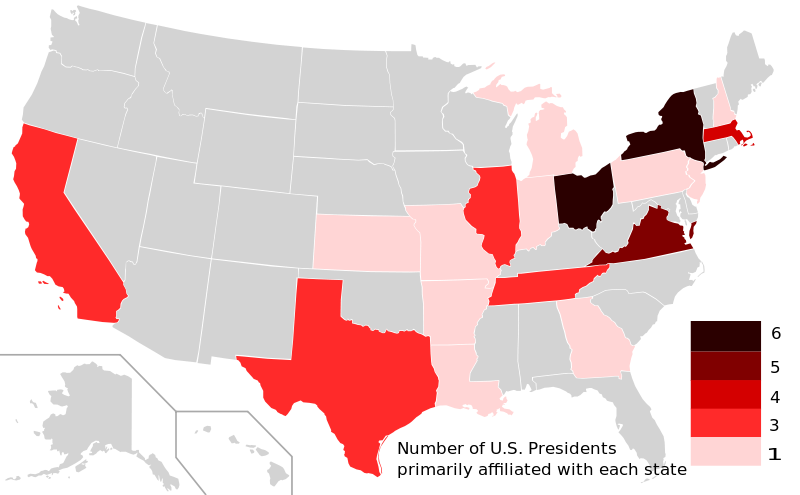
Looking at a list of the presidents by home state makes it a little more clear: from Ulysses S. Grant to Warren G. Harding, every president was from a swing state*. Looking at each election makes it even more clear; Republicans nominated someone from a swing state in every election from 1868 to 1920 (with the exception of James G. Blaine of Maine in 1884, which they lost), and Democrats did so a substantial majority of the time. Three of the four times they didn't were for William Jennings Bryan, who was a magnificent Nebraskan orator who nevertheless got spanked all three times. In 1920, both Warren G. Harding and James Cox were from Ohio.
So the answer is: for fifty years, both parties nominated people from swing states, and Ohio was a popular choice for the Republicans, who won most of those elections, albeit often narrowly. Ohio's dominance is, however, mitigated somewhat by Grant being an Illinois native, and it was listed as his home state in 1872. The delegates at the 1868 convention cannot have considered him to be an Ohioan, since three-term Ohio Senator had a plurality of votes for the vice-presidential nomination for the first four ballots, and nominating two men from Ohio would have denied them that state's votes in the Electoral College*. Grant still would have won easily without Ohio's 21 votes, since he beat Horatio Seymour of New York 214 votes to 80, but that's the election, not the convention.
Grant was nominated based not on his Ohio residency, which borders on the fictitious, but because he was seen as winning the Civil War. Garfield, in 1880, had served nine terms in the House, and was preparing to take a seat in the Senate, but was commonly addressed and referred to in the convention as General, since he had served as a Major General during the Civil War, and that title was seen as far more prestigious than a member of the House. Frankly, that's probably a pretty common opinion these days, what with Congress being literally less popular than diarrhea.
*New Jersey, New York and Indiana were swing states in the late nineteenth century, and Grover Cleveland lost reelection to Benjamin Harrison in 1888 because he couldn't keep the latter two states in his column. In fact, they were the only states to change sides from 1884 to 1888, and 1888 was also the first election since 1876 and the third ever in which the candidate who won the most popular votes didn't win the election.
*Each elector gets two votes, at least one of which must be cast for someone from a different state than his own. If both people on the ticket are from the same state, then the electors from that state cannot cast both votes for both people on the ticket. The most likely outcome in the case of a massive screwup like that, assuming one of the people on the ticket cannot hastily obtain legal residence in any other state, would have been for all the electors to vote for someone else for Vice President, since it was not a highly respected position back then, and losing that while winning the Presidency would have been very much preferable to the opposite.
Thursday, May 22, 2014
Kooky Traditions: The Candy Desk
We tend to think of the government, and particularly elected officials, as being stodgy old corrupt boring people, but very little of that is actually true. (Old I'll give you pretty much right off the bat, since the average age hovers a little under 60, and Daniel Inouye of Hawaii and Frank Lautenberg of California died in office at nearly 90.) The story here begins in 1965, with a freshman senator from California named George Murphy.
George was a big fan of candy (and I can hardly criticize him for that, having a bag of gummi bears on my desk as I write this), and he started stashing some in his desk, although you're not allowed to eat on the Senate floor. Then he moved to a desk with rather higher traffic, next to one of the main doors, and started passing out his delicious treats.

Pretty soon, they started calling it the Candy Desk, and when Murphy lost reelection in 1970, other Republicans took up the baton. Paul Fannin of Arizona was the first one to do so, storing sugary snacks in his desk for the entirety of his third term. It got passed around quite a bit after that, and the desk itself was a bit mobile too, staying around that area but not being nailed down to a specific senator's working area until 1981, when Roger Jepsen of Iowa got bags of hard candy.
The heyday of the candy desk came during Rick Santorum's tenure; he held the spot from 1997-2007, when Bob Casey beat him by seventeen points. During that decade, Hershey shipped him a hundred pounds of their products four times a year, plus Just Born sending in Mike and Ikes and such. After he lost, Craig Thomas of Wyoming had the desk, but there was no single company in Wyoming big enough to hand over hundreds of dollars of candy for the Senate's enjoyment. And yes, it had to be in Wyoming, because the only reason this worked in the first place was a Senate rule allowing members to distribute products of their home state for the chamber's enjoyment. They got around this by having smaller stores give a little bit each, but Thomas died a few months later anyway.
The current occupant is Mark Kirk of Illinois, who brings gum, popcorn, jelly beans, and tootsie rolls. Democrats have another, less well-known version; the Conference Secretary, currently Patty Murray of Washington, keeps a desk in front stocked with candy that Jay Rockefeller buys with the money people give him. Rockefeller is retiring this year, and if Republican Shelley Moore Capito wins, there may be a bit of a scramble on the part of Democrats with a partisan sweet tooth.
George was a big fan of candy (and I can hardly criticize him for that, having a bag of gummi bears on my desk as I write this), and he started stashing some in his desk, although you're not allowed to eat on the Senate floor. Then he moved to a desk with rather higher traffic, next to one of the main doors, and started passing out his delicious treats.
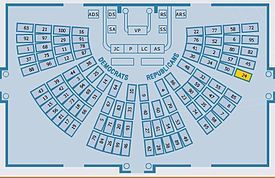
Pretty soon, they started calling it the Candy Desk, and when Murphy lost reelection in 1970, other Republicans took up the baton. Paul Fannin of Arizona was the first one to do so, storing sugary snacks in his desk for the entirety of his third term. It got passed around quite a bit after that, and the desk itself was a bit mobile too, staying around that area but not being nailed down to a specific senator's working area until 1981, when Roger Jepsen of Iowa got bags of hard candy.
The heyday of the candy desk came during Rick Santorum's tenure; he held the spot from 1997-2007, when Bob Casey beat him by seventeen points. During that decade, Hershey shipped him a hundred pounds of their products four times a year, plus Just Born sending in Mike and Ikes and such. After he lost, Craig Thomas of Wyoming had the desk, but there was no single company in Wyoming big enough to hand over hundreds of dollars of candy for the Senate's enjoyment. And yes, it had to be in Wyoming, because the only reason this worked in the first place was a Senate rule allowing members to distribute products of their home state for the chamber's enjoyment. They got around this by having smaller stores give a little bit each, but Thomas died a few months later anyway.
The current occupant is Mark Kirk of Illinois, who brings gum, popcorn, jelly beans, and tootsie rolls. Democrats have another, less well-known version; the Conference Secretary, currently Patty Murray of Washington, keeps a desk in front stocked with candy that Jay Rockefeller buys with the money people give him. Rockefeller is retiring this year, and if Republican Shelley Moore Capito wins, there may be a bit of a scramble on the part of Democrats with a partisan sweet tooth.
Wednesday, May 21, 2014
How do we amend the Constitution?
Well, it's a difficult process, and that's kind of the point; when an amendment is added, the fundamentals of American law shift, in a way that no branch can ignore. The consequences might be relatively minor, as with the 27th amendment prohibiting Congress from raising its own pay until after the next election, or they might be huge, as with the 19th amendment giving women the right to vote in all elections.
Either way, the basic process isn't too complicated: both the Congress and the states must agree decisively that the amendment is needed. There are two ways to achieve each objective, making for four paths total, but all but one of our amendments gone through the same one.
First, we need the approval of Congress; this can come either from a 2/3 vote in favor in both houses, or a 2/3 vote in favor from a convention called by Congress at the request of the legislatures of 2/3 of the states. The former is straightforward, while the latter is a little more vague. Who would be at this convention, and how many people would be there be? There is no answer, because it has never happened, and Congress has never passed legislation addressing the question either.
Second, we need approval of the states, which can be simple majority votes, but those votes have to take place in 3/4 of the states, either in the legislature itself, or in a state ratifying convention. The same question applies for the latter, and while a few states have enacted laws providing a general method for the conduction of those conventions, for the most part it's up to each state to decide how to do so, if Congress does it again. Congress only specified conventions once, for the 21st amendment, fearing that the criminals making enormous amounts of money from liquor's illegality would pressure state legislators to keep it that way, but conventions would be less susceptible to that.
All well and good, that's how it works. How can I make that happen? you might be thinking, assuming there's an issue dear to your heart that would require a constitutional amendment to correct. The single most crucial thing here is organization; no one ever got an amendment alone. It's quite possible that there's already a group dedicated to your cause, and whether or not there is, you'll have to work very hard to persuade Congress and your state to take it up.
Say you're not up for quitting your job to work on this, or making it your second job. How can you do anything?
The Congress, whenever two thirds of both houses shall deem it necessary, shall propose amendments to this Constitution, or, on the application of the legislatures of two thirds of the several states, shall call a convention for proposing amendments, which, in either case, shall be valid to all intents and purposes, as part of this Constitution, when ratified by the legislatures of three fourths of the several states, or by conventions in three fourths thereof, as the one or the other mode of ratification may be proposed by the Congress; provided that no amendment which may be made prior to the year one thousand eight hundred and eight shall in any manner affect the first and fourth clauses in the ninth section of the first article; and that no state, without its consent, shall be deprived of its equal suffrage in the Senate.
Either way, the basic process isn't too complicated: both the Congress and the states must agree decisively that the amendment is needed. There are two ways to achieve each objective, making for four paths total, but all but one of our amendments gone through the same one.
First, we need the approval of Congress; this can come either from a 2/3 vote in favor in both houses, or a 2/3 vote in favor from a convention called by Congress at the request of the legislatures of 2/3 of the states. The former is straightforward, while the latter is a little more vague. Who would be at this convention, and how many people would be there be? There is no answer, because it has never happened, and Congress has never passed legislation addressing the question either.
Second, we need approval of the states, which can be simple majority votes, but those votes have to take place in 3/4 of the states, either in the legislature itself, or in a state ratifying convention. The same question applies for the latter, and while a few states have enacted laws providing a general method for the conduction of those conventions, for the most part it's up to each state to decide how to do so, if Congress does it again. Congress only specified conventions once, for the 21st amendment, fearing that the criminals making enormous amounts of money from liquor's illegality would pressure state legislators to keep it that way, but conventions would be less susceptible to that.
All well and good, that's how it works. How can I make that happen? you might be thinking, assuming there's an issue dear to your heart that would require a constitutional amendment to correct. The single most crucial thing here is organization; no one ever got an amendment alone. It's quite possible that there's already a group dedicated to your cause, and whether or not there is, you'll have to work very hard to persuade Congress and your state to take it up.
Say you're not up for quitting your job to work on this, or making it your second job. How can you do anything?
- Well, you can contact your representatives, but to make that remotely effective you'll have to get a whole lot of other people to do the same -- Twitter and Facebook help a lot here.
- This is primary season, so if your state hasn't had them yet, you can vote for people who support your stance on this issue; the most important part here is telling the incumbent "You lost/gained my vote because you don't/do support X!" And yes, this requires you to vote, since politicians have no reason to care about anything you say if you're not part of the political process.
- Find someone in the legislature who agrees with you, even if they don't represent you, and cheer that person on.
- Do as much research into the topic as you can, so you can make an informed case for it, and address counterarguments.
- Officially, counties and cities have no role in constitutional amendments, but that doesn't mean they can't influence the legislature. Talk to your board of supervisors or whatever your local government is, and ask them to approve a resolution calling for your amendment.
- If you live close to your state capital, you might be able to attend hearings on legislation relating to your issue; if you also have a dogged crusader for your issue and intimate knowledge thereof, it's just faintly possible that you might be able to testify on the subject.
Tuesday, May 20, 2014
How did the 17th Amendment get ratified?
The 17th Amendment to the Constitution was proposed by Congress in 1912 and promptly ratified by the states, shifting the power to elect senators from the state legislature to the people of the state. This came after nearly a hundred years of efforts to do so, all of which had been ignored in the Senate.
The idea initially was that the House, directly elected by the people, would represent them, and the Senate, a cooler and more temperate body, would represent the states. While the loose association of the Articles of Confederation was undesirable, and on the delegates' minds in the Constitutional Convention of 1787, many of them feared that the states would be swallowed up by the federal government, and their rights and powers usurped, so they divided the Congress in part to assuage that concern.
How did that change? Why did the state legislatures want to give up that power, and how did anyone persuade the Senate to go along with it?
It seems odd at first, but the momentum began with the states; from 1891 to 1905, 20 different states deadlocked on 46 senatorial elections. Three years later, Oregon enacted open primaries: the legislature would still have the final choice, but the people of the state chose the nominee for each party. Other states followed that example, with some opting for the same primary approach, and others deferring the entire election to the people.
The state legislatures being the impetus isn't so surprising, actually; since they were elected directly by the people, they could in theory reflect the people's wishes. In addition, while electing a senator only had to be done twice in six years, thus ideally occupying very little of their time, it became a major issue, overshadowing the more boring things like water use, mineral rights, tourism, that made up more of the business they wanted to conduct. Sparked in part by William Randolph Hearst's enthusiastic promotion of the idea, state legislatures began reforming their own senatorial elections, and calling for an amendment requiring popular election.
The beginning of the end for legislative elections came in 1910: 31 states passed resolutions petitioning Congress to propose a constitutional amendment, and ten senators opposing reform were defeated in their reelection attempts. The majority of the Senate that still didn't like the idea saw the 27 states calling for a constitutional convention, with four more ready to do so, and finally, grudgingly, approved the 17th amendment, fearing the drastic changes that might threaten their privilege in a convention they could not influence.
The first draft prohibited federal intervention in cases of racial discrimination against voters; Southern Representatives didn't want the gubmint forcing them to let folks other than whitey into the polls. The Senate passed a version without that rider, and the House went along with it, sending it out to the states in May 1912. Less than a year later, the 36th ratification came in, and the Senate became a body fully elected by the people.
The idea initially was that the House, directly elected by the people, would represent them, and the Senate, a cooler and more temperate body, would represent the states. While the loose association of the Articles of Confederation was undesirable, and on the delegates' minds in the Constitutional Convention of 1787, many of them feared that the states would be swallowed up by the federal government, and their rights and powers usurped, so they divided the Congress in part to assuage that concern.
How did that change? Why did the state legislatures want to give up that power, and how did anyone persuade the Senate to go along with it?
It seems odd at first, but the momentum began with the states; from 1891 to 1905, 20 different states deadlocked on 46 senatorial elections. Three years later, Oregon enacted open primaries: the legislature would still have the final choice, but the people of the state chose the nominee for each party. Other states followed that example, with some opting for the same primary approach, and others deferring the entire election to the people.
The state legislatures being the impetus isn't so surprising, actually; since they were elected directly by the people, they could in theory reflect the people's wishes. In addition, while electing a senator only had to be done twice in six years, thus ideally occupying very little of their time, it became a major issue, overshadowing the more boring things like water use, mineral rights, tourism, that made up more of the business they wanted to conduct. Sparked in part by William Randolph Hearst's enthusiastic promotion of the idea, state legislatures began reforming their own senatorial elections, and calling for an amendment requiring popular election.
The beginning of the end for legislative elections came in 1910: 31 states passed resolutions petitioning Congress to propose a constitutional amendment, and ten senators opposing reform were defeated in their reelection attempts. The majority of the Senate that still didn't like the idea saw the 27 states calling for a constitutional convention, with four more ready to do so, and finally, grudgingly, approved the 17th amendment, fearing the drastic changes that might threaten their privilege in a convention they could not influence.
The first draft prohibited federal intervention in cases of racial discrimination against voters; Southern Representatives didn't want the gubmint forcing them to let folks other than whitey into the polls. The Senate passed a version without that rider, and the House went along with it, sending it out to the states in May 1912. Less than a year later, the 36th ratification came in, and the Senate became a body fully elected by the people.
Monday, May 19, 2014
Why did Russia sell Alaska, and why did the US buy it?
Russia colonized Alaska in the first place mainly because it was the only place they could reach that didn't have six other nations elbowing each other in the face to claim land there. We all laughed at Tina Fey, but Russia is pretty much right next to Alaska, a lot closer than any of the European colonial nations to the Americas, which just about makes up for how long and cold the winter is. There used to be a whole lot of seals and bears in Alaska, neatly making up for thousands of years of killing everything that could make a pair of mittens in Siberia. So people started making their way east, and making a fair amount of dough skinning the wildlife.
The Russian Empire got antsy about Alaska not too long after the Crimean War against Great Britain, from 1853 to 1856; British Columbia was right next door, and when they found gold people started coming there enough that the crown established a full-fledged colony. Tsar Alexander II figured that next time Russia went to war with England, they'd probably lose Alaska anyway, so selling it would at least give them some cash for their trouble.
So they started trying to get some interest from England and the US in 1859, but we were busy with the Civil War (it hadn't started yet, but flames were in the air and it would have taken a miracle to stop) and England didn't much care, so nothing happened for a few years. In that time, Russia also borrowed a crapload of money, and now really needed to sell Alaska.
William Seward, Lincoln's Secretary of State, got a lot more receptive after the war ended, and agreed on a price of $7.2 million, a bit more than 2 cents per acre for a place twice as big as Texas. There was a lot of grumbling in the press over this, since we were hardly pressed for space or flush with cash as it was, but on the upside, Russia liked us a lot more, and hemming in British Columbia made annexing it eventually more of a possibility. (Spoiler warning: we didn't.)
Still, those two justifications probably wouldn't have been enough without the fur trade: Russia had set up 23 trading posts, and around 10,000 people lived in Alaska where the harvesting company was working. We started charging an annual $50,000 fee for being allowed to club seals, and $2.625 per skin; with a hundred thousand skins per year, it would be around twenty-five years to recoup the costs of the purchase, assuming more people didn't move there to hunt seals, and nobody found gold.
Of course, we did find gold in Alaska, first in Klondike and then in Nome. Around a hundred thousand prospectors trekked up there from 1896 to 1899, but less than half of them made it, since traveling up through Canada was an incredible pain in the neck at the time. Maybe four thousand people actually made any appreciable money on the gold rush, and everyone else ended up with plenty of pain, but no gain. Of course, the real victims here were the natives, since they weren't allowed to buy land (and thus couldn't mine without risking getting pushed off), and the miners wrecked the environment something awful.
The Russian Empire got antsy about Alaska not too long after the Crimean War against Great Britain, from 1853 to 1856; British Columbia was right next door, and when they found gold people started coming there enough that the crown established a full-fledged colony. Tsar Alexander II figured that next time Russia went to war with England, they'd probably lose Alaska anyway, so selling it would at least give them some cash for their trouble.
So they started trying to get some interest from England and the US in 1859, but we were busy with the Civil War (it hadn't started yet, but flames were in the air and it would have taken a miracle to stop) and England didn't much care, so nothing happened for a few years. In that time, Russia also borrowed a crapload of money, and now really needed to sell Alaska.
William Seward, Lincoln's Secretary of State, got a lot more receptive after the war ended, and agreed on a price of $7.2 million, a bit more than 2 cents per acre for a place twice as big as Texas. There was a lot of grumbling in the press over this, since we were hardly pressed for space or flush with cash as it was, but on the upside, Russia liked us a lot more, and hemming in British Columbia made annexing it eventually more of a possibility. (Spoiler warning: we didn't.)
Still, those two justifications probably wouldn't have been enough without the fur trade: Russia had set up 23 trading posts, and around 10,000 people lived in Alaska where the harvesting company was working. We started charging an annual $50,000 fee for being allowed to club seals, and $2.625 per skin; with a hundred thousand skins per year, it would be around twenty-five years to recoup the costs of the purchase, assuming more people didn't move there to hunt seals, and nobody found gold.
Of course, we did find gold in Alaska, first in Klondike and then in Nome. Around a hundred thousand prospectors trekked up there from 1896 to 1899, but less than half of them made it, since traveling up through Canada was an incredible pain in the neck at the time. Maybe four thousand people actually made any appreciable money on the gold rush, and everyone else ended up with plenty of pain, but no gain. Of course, the real victims here were the natives, since they weren't allowed to buy land (and thus couldn't mine without risking getting pushed off), and the miners wrecked the environment something awful.
Subscribe to:
Posts (Atom)